Mobile IV Therapy in Bali: How Hotel & Villa Visits Work
Learn how mobile IV therapy in Bali works for hotel and villa visits, what to expect before and during an appointment, when IV hydration may be considered, and when travelers should seek medical care instead.
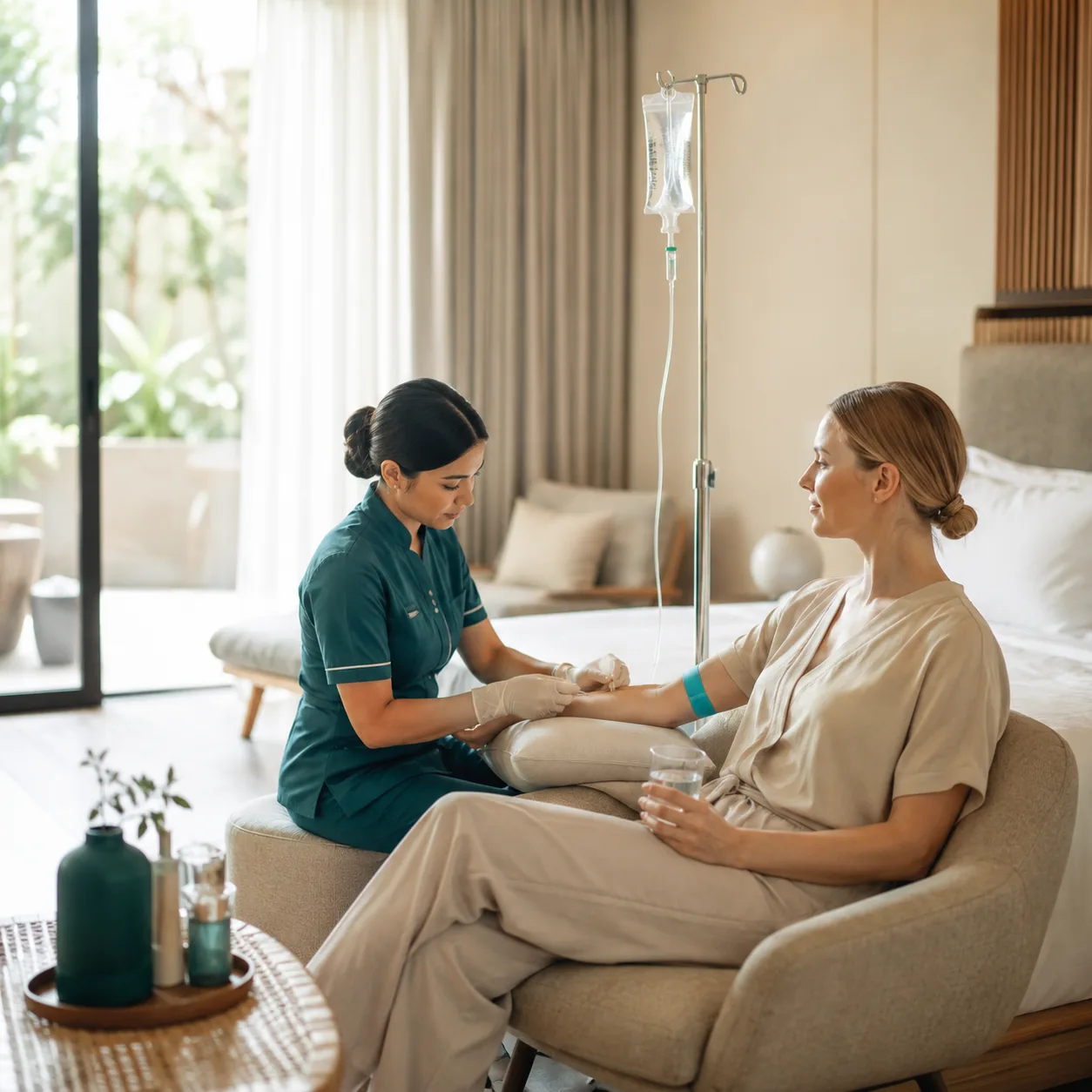
Travel can be demanding on the body. Long flights, Bali’s warm climate, disrupted sleep, changes in diet, alcohol, and busy itineraries can leave travelers feeling tired or dehydrated. When resting at your accommodation feels more practical than traveling elsewhere for support, mobile IV therapy in Bali is one option you may come across.
A mobile service brings IV therapy to your accommodation, such as a hotel or private villa. Rather than arranging transportation while feeling unwell or exhausted, you can remain in a familiar environment while a healthcare professional assesses whether IV therapy is appropriate.
But what actually happens during an IV hotel or villa visit? And when should you consider medical evaluation instead?
This guide explains the process, what to expect, and the important safety considerations travelers should know.
What Is Mobile IV Therapy?
Mobile IV therapy involves a healthcare professional providing intravenous fluids at a location outside a traditional clinic or hospital, such as your hotel or villa.
An IV delivers fluid directly into a vein. In conventional medical care, intravenous fluids are commonly used when clinically appropriate, including situations where someone cannot adequately replace fluids orally.
For travelers, an IV home visit in Bali may be considered when convenience is important and a healthcare professional determines that IV therapy is suitable for the person's situation.
However, not every case of tiredness, dehydration, nausea, or general discomfort requires an IV. Mild symptoms can sometimes be managed with rest, appropriate food, water, and oral rehydration solutions.
The appropriate approach depends on your symptoms, health history, and clinical assessment.
Why Travelers Consider Mobile IV Therapy in Bali
Bali itineraries can involve more physical strain than expected. A traveler might arrive after a long international flight, spend hours outdoors in hot weather, experience disrupted sleep, or have difficulty keeping up with hydration.
Common reasons travelers may enquire about mobile IV services include:
- Possible dehydration after heat exposure or inadequate fluid intake
- Travel fatigue after a long journey
- Jet lag and disrupted sleep
- Feeling unwell after alcohol consumption
- Vomiting or diarrhea that has made oral hydration difficult
- General wellness and hydration support
These situations are not automatically indications for IV treatment. Symptoms such as fatigue, headache, dizziness, nausea, and weakness can have many possible causes.
A healthcare professional can assess your situation and determine whether IV hydration may be appropriate or whether another form of care is needed.
How a Mobile IV Hotel or Villa Visit Works
The exact process can vary between providers and according to your individual circumstances. In general, an IV hotel Bali or IV villa Bali appointment involves several stages.
1. You Contact the Provider
The first step is usually contacting the mobile IV service and explaining where you are staying and why you are seeking support.
Providing accurate information about your symptoms is important. Instead of simply saying that you “need an IV,” describe what is happening.
Relevant information may include:
- Your main symptoms
- How long you have felt unwell
- Whether you have been vomiting or experiencing diarrhea
- Whether you can drink and keep fluids down
- Any significant medical conditions
- Medications or known allergies
- Any symptoms that are becoming severe or rapidly worsening
This information can help determine what type of assessment or medical care may be appropriate.
2. Your Situation Is Assessed
IV therapy should not be treated as a one-size-fits-all wellness procedure.
Before treatment, a healthcare professional should consider your current symptoms and relevant health information. Depending on the circumstances, they may determine that IV therapy is appropriate, that oral hydration and rest are reasonable, or that you need evaluation at a clinic or hospital.
This distinction matters particularly when travelers assume symptoms are caused by dehydration, Bali Belly, a hangover, or jet lag.
Similar symptoms can sometimes occur with other medical conditions, so self-diagnosis can be unreliable.
3. The Healthcare Professional Comes to Your Accommodation
If a mobile visit is considered appropriate, treatment can take place at your accommodation rather than requiring you to travel to another location.
This is one of the main reasons travelers choose mobile IV therapy in Bali.
For someone staying in a hotel, an IV hotel visit allows them to remain in their room. Travelers staying in private accommodation may similarly arrange an IV villa visit.
A quiet, comfortable area where you can sit or lie down is generally preferable.
If you are staying at a hotel, accommodation access procedures may vary. It can be useful to check whether reception needs to be informed that a healthcare professional will be visiting your room.
4. You Are Assessed Before IV Therapy Begins
Before proceeding, the healthcare professional can review relevant information and assess whether treatment remains appropriate based on your condition at the time of the visit.
This is also the time to mention anything that might affect treatment, including medical conditions, medications, allergies, previous reactions, or changes in your symptoms.
Do not withhold information because you assume it is unrelated.
The purpose of this assessment is not simply to confirm the treatment you requested. It is to determine whether the proposed care is appropriate for you.
5. IV Therapy Is Administered When Appropriate
If IV therapy is considered suitable, an intravenous line is placed and fluids are administered.
You will generally remain seated or lying comfortably during the process.
If you experience pain, swelling, unusual discomfort, dizziness, breathing difficulty, or another unexpected symptom during treatment, tell the healthcare professional immediately.
What is included in any IV treatment should be discussed with the provider rather than assumed. Travelers should also feel comfortable asking what is being administered and why it has been recommended.
6. You Receive Appropriate Guidance Afterward
Once the IV is complete, the healthcare professional removes the IV line and may provide guidance based on your situation.
IV hydration does not replace the fundamentals of recovery.
Depending on why you were feeling unwell, you may still need to rest, continue drinking appropriate fluids, eat as tolerated, limit alcohol, avoid excessive heat, and adjust your itinerary.
If symptoms persist or worsen, further medical evaluation may be necessary.
Hotel vs. Villa IV Visits: Is There a Difference?
From the traveler's perspective, the main difference is usually the accommodation environment.
IV Therapy at a Hotel in Bali
If you are staying in a hotel or resort, access may involve reception, security, or hotel-specific visitor procedures.
It can help to have your hotel name, room number, and booking name available when arranging the visit.
You may also want to inform reception that you are expecting a healthcare provider, particularly at properties with controlled guest access.
IV Therapy at a Private Villa
Villa visits can offer a private and familiar setting, but accurate location details are important. Bali has many villas located along smaller roads or lanes where addresses are not always straightforward.
Providing clear accommodation information can help avoid confusion when arranging a mobile visit.
Whether you choose an IV hotel Bali service or an IV villa Bali service, the medical considerations remain more important than the setting: IV therapy should be provided only when appropriate for your individual circumstances.
Do You Actually Need an IV for Dehydration?
Not necessarily.
For mild dehydration, especially when you are alert and able to drink normally, oral fluids may be sufficient. An oral rehydration solution can be particularly useful when fluid loss involves vomiting, diarrhea, or heavy sweating because it provides water together with electrolytes.
Resting somewhere cool and temporarily reducing strenuous activities can also be sensible.
IV fluids may be considered when oral hydration is difficult or insufficient, but the decision should depend on professional assessment rather than convenience alone.
If you are unsure, explain your symptoms to a healthcare professional instead of assuming that IV therapy is required.
What About Bali Belly?
“Bali Belly” is an informal term travelers often use for gastrointestinal illness involving symptoms such as diarrhea, abdominal discomfort, nausea, or vomiting.
The term does not identify the specific cause.
If symptoms are mild and you can drink normally, hydration, rest, and appropriate oral rehydration may be reasonable supportive measures. More significant fluid loss or difficulty keeping fluids down may warrant professional assessment.
IV hydration may be considered in some situations involving dehydration, but it does not automatically treat the underlying cause of gastrointestinal illness.
Travelers experiencing severe or persistent symptoms should seek appropriate medical care rather than relying solely on wellness treatment.
A dedicated guide to IV hydration for Bali Belly can provide more context on when IV fluids may be considered and when medical evaluation becomes more important.
Can Mobile IV Therapy Help After a Hangover?
Alcohol can contribute to dehydration and disrupted sleep, among other effects. However, a hangover is more complex than dehydration alone.
Water, food when tolerated, rest, and time are often important parts of recovery.
IV fluids may help address hydration in appropriate circumstances, but they should not be presented as a guaranteed or instant hangover cure.
If someone is difficult to wake, confused, having seizures, breathing abnormally, repeatedly vomiting, or showing other signs of severe alcohol-related illness, this requires urgent medical attention rather than routine mobile wellness treatment.
Travelers looking specifically at this option may also find a guide to IV therapy for hangovers in Bali useful for understanding the difference between supportive hydration and emergency care.
What About Jet Lag and Travel Fatigue?
After crossing several time zones, your internal body clock can be out of sync with local time. Jet lag may involve sleep problems, daytime fatigue, difficulty concentrating, and general discomfort.
Hydration can be part of looking after yourself after a long flight, but IV therapy does not reset your circadian rhythm.
For many travelers, practical jet lag recovery strategies include adjusting sleep to Bali time, getting appropriately timed daylight exposure, staying hydrated, eating regular meals, and allowing time for the body to adapt.
If dehydration is also a concern, a healthcare professional can assess whether additional hydration support is appropriate.
For more detailed strategies, travelers can refer to a dedicated jet lag recovery in Bali guide.
When Mobile IV Therapy Is Not the Right Next Step
Convenience should not delay necessary medical care.
Certain symptoms require prompt professional medical evaluation and may be more appropriately managed in a clinic, hospital, or emergency setting.
Seek urgent medical attention if you or someone traveling with you experiences symptoms such as:
- Difficulty breathing
- Chest pain
- Fainting or loss of consciousness
- Severe confusion or unusual difficulty staying awake
- Seizures
- Signs of a severe allergic reaction
- Severe or rapidly worsening abdominal pain
- Blood in vomit or stool
- Persistent vomiting with an inability to keep fluids down
- Signs of severe dehydration or a significant deterioration in condition
- Other severe, sudden, or rapidly worsening symptoms
This list is not exhaustive. If you are concerned that your condition may be serious, seek medical evaluation rather than waiting for a routine wellness appointment.
How to Prepare for an IV Home Visit in Bali
If a mobile IV visit has been arranged, a little preparation can make the appointment easier.
Have your accommodation details ready and choose a comfortable place where you can sit or lie down. Keep information about medications, allergies, and relevant health conditions available, and be prepared to describe your symptoms accurately.
Continue to follow any instructions given by the healthcare professional or provider. Do not intentionally avoid drinking water simply because you expect to receive IV fluids.
For hotel visits, checking guest-access procedures in advance can also prevent unnecessary delays at reception or security.
Questions to Ask Before Receiving Mobile IV Therapy
Travelers should feel comfortable asking questions before agreeing to treatment.
Useful questions include what is being administered, why it is being recommended, who will provide the treatment, and what you should do if your symptoms do not improve or become worse.
You should also mention relevant health conditions, medications, allergies, pregnancy, or other medical circumstances that could affect whether IV therapy is appropriate.
Professional assessment matters more than choosing a treatment based solely on a menu or wellness claim.
Why Mobile Care Can Be Convenient While Traveling
Being unwell away from home can make simple logistics frustrating.
You may not know the local area, transportation can take time, and sitting in traffic when you feel nauseated or exhausted may be uncomfortable. A mobile service can remove some of those logistical barriers when your condition is appropriate for care at your accommodation.
This is where mobile IV therapy differs most clearly from visiting a fixed-location service: the healthcare professional comes to the hotel or villa rather than requiring the traveler to make the journey.
That convenience should complement appropriate clinical judgment, not replace it.
Frequently Asked Questions About Mobile IV Therapy in Bali
Can IV therapy be provided in my Bali hotel room?
Mobile IV services may offer visits to traveler accommodation, including hotels. Access can depend on the property's visitor procedures, so you may need to coordinate with reception or security.
Can I arrange an IV at a private villa?
Mobile services can also provide villa visits where available. Provide accurate location and access information when arranging the appointment.
Do I need IV therapy if I feel dehydrated?
Not always. Mild dehydration can often be managed with oral fluids or an oral rehydration solution when you can drink and keep fluids down. A healthcare professional can assess whether IV hydration may be appropriate.
Is mobile IV therapy a treatment for Bali Belly?
IV fluids may be used to support hydration when appropriate, but they do not automatically treat the underlying cause of gastrointestinal illness. Persistent, severe, or worsening symptoms should be medically evaluated.
Will an IV cure my hangover or jet lag?
No treatment should be expected to provide a guaranteed or instant cure. Hydration may be one part of supportive care, while hangovers and jet lag involve factors beyond hydration alone.
What should I tell the provider before treatment?
Describe your symptoms and their duration accurately. You should also disclose relevant medical conditions, medications, allergies, and other health information that could affect treatment.
Should I book mobile IV therapy or go to a hospital?
That depends on your condition. Routine mobile wellness care is not a substitute for emergency or hospital treatment. Severe, rapidly worsening, or concerning symptoms should receive prompt medical evaluation.
Mobile IV Therapy Without Leaving Your Accommodation
For travelers who are tired, dehydrated, or simply do not want another journey across Bali while feeling unwell, receiving professional care at their accommodation can be a practical option.
The key is choosing care based on your actual condition rather than assuming every travel-related symptom requires an IV.
Drips To You Bali provides mobile IV therapy for travelers, allowing appropriate care to take place in the comfort of accommodation such as a hotel or villa. If you are considering a visit, contact Drips To You Bali and explain your symptoms and situation so the appropriate next step can be considered.
If your symptoms are severe, rapidly worsening, or suggest a medical emergency, seek urgent medical attention instead of waiting for a mobile wellness visit.
This content is educational and does not replace medical advice. Our medical team screens every guest before treatment.